

Comparing the 2026 Hyundai Tucson to the 2026 Toyota RAV4
Comparing the 2026 Hyundai Tucson to the 2026 Toyota RAV4
Posted on March 31, 2026
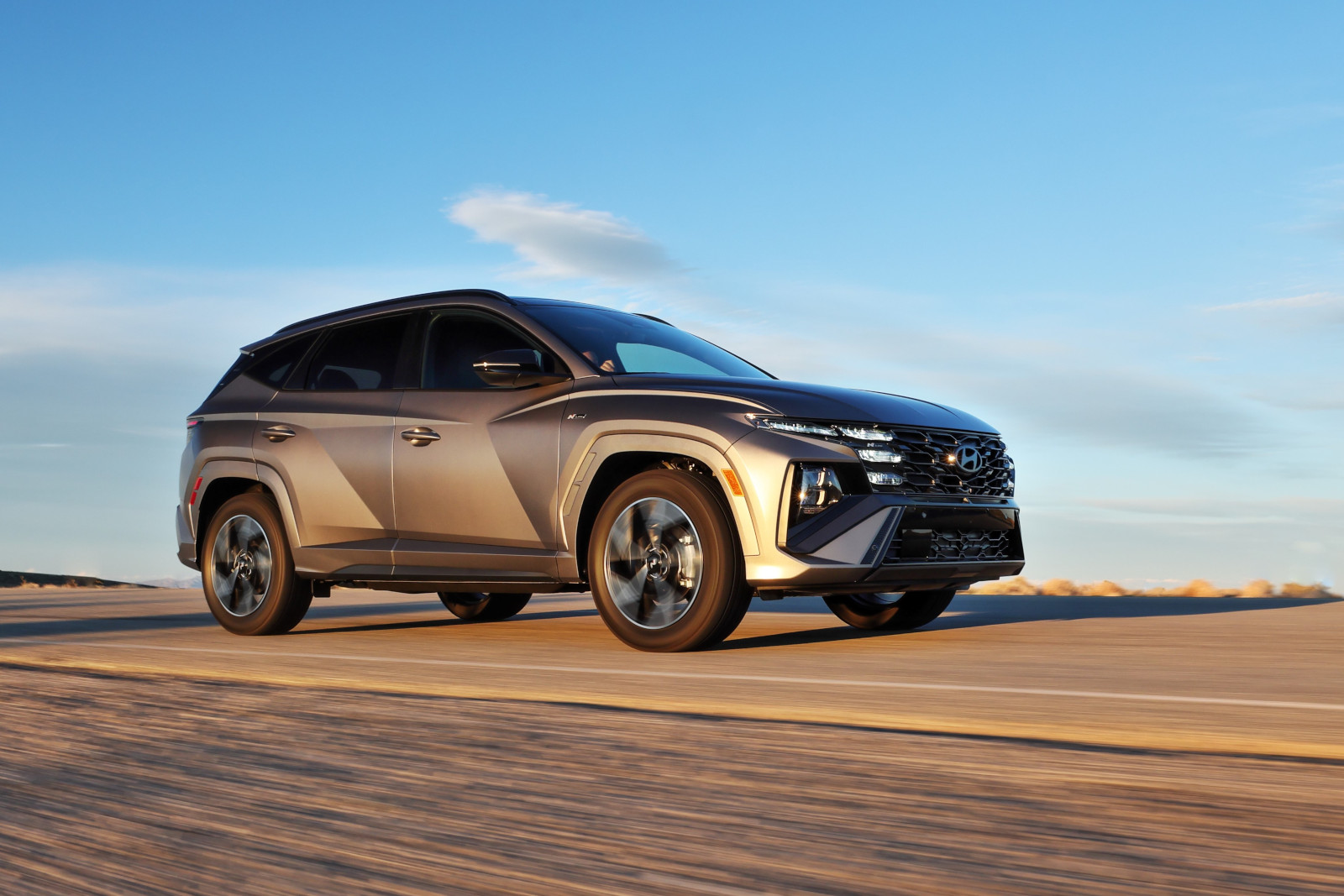
The 2026 Hyundai Tucson arrives with a challenge: how do you compete against the RAV4's hybrid efficiency dominance while serving families who need cargo space and electrification flexibility? Hyundai's answer sits in three distinct powertrains, class-leading hauling capacity, and standard advanced connectivity that positions the Tucson as the practical choice for Ontario drivers balancing daily efficiency with weekend versatility.
| Feature | 2026 Hyundai Tucson | 2026 Toyota RAV4 |
| Powertrain Options | 2.5L I4 / 1.6L Turbo HEV / 1.6L Turbo PHEV | 2.5L Hybrid / 2.5L PHEV |
| Power Range | 187-268 hp | 236-324 hp |
| Electric Range (PHEV) | 51 km | 80 km |
| Maximum Cargo Volume | 2,119 L | 1,070 L |
| Standard Infotainment | 12.3" touchscreen with wireless connectivity | 12.9" touchscreen with wireless connectivity |
Three Powertrains for Three Different Lives
The Tucson's engine lineup answers a question the RAV4 doesn't ask: what if your driving needs change with the season? The base 2.5L Smartstream I4 delivers 187 hp and 178 lb-ft across Preferred, Preferred w/ Trend Package, and XRT trims through an 8-speed automatic transmission. This naturally aspirated option serves drivers who cover highway distance without electrification complexity.
Step up to the N Line trim and the 1.6L Turbo Hybrid generates 231 hp and 271 lb-ft through a 6-speed hybrid automatic. The 1.49 kWh battery assists acceleration without requiring plug-in infrastructure. top trim buyers choose between this hybrid or the 1.6L Turbo Plug-in Hybrid, which peaks at 268 hp with a 13.8 kWh battery delivering 51 km of electric-only driving.
While the RAV4 PHEV's 80 km electric range surpasses the Tucson's 51 km on paper, the Tucson's base gasoline option provides a lower entry point for buyers who don't need plug-in capability - which matters more for families in rural Ontario where Level 2 charging access remains inconsistent outside urban centres.
Where 2,119 Litres Changes the Equation
Cargo capacity separates these vehicles more decisively than any powertrain spec. The Tucson expands to 2,119 L with rear seats folded in non-hybrid configurations. Even the PHEV top trim, which sacrifices space for battery placement, still provides 902 L behind the second row - competitive with the RAV4's single 1,070 L maximum across all variants.
For families moving between cottages, hauling hockey equipment, or managing Costco runs with strollers and groceries, that extra volume in the Tucson's favour eliminates the "will it fit?" calculation. The RAV4's consistent cargo volume works for buyers with predictable hauling needs. The Tucson's range accommodates the unpredictable.
The Fuel Economy Trade-Off You Actually Choose
The RAV4's hybrid efficiency delivers 5.5-6.2 L/100km combined across its trim lineup. This offers Toyota's core strength - proven hybrid architecture refined over two decades. The Tucson's electrified variants don't publish combined fuel economy figures in available documentation, which prevents direct comparison on this metric.
What the Tucson offers instead is powertrain choice. Drivers who prioritize maximum efficiency can select the PHEV top and cover most urban commutes on electric power alone. Those who cover 400 km daily on Highway 401 can choose the naturally aspirated 2.5L and avoid hybrid system weight. The RAV4 commits every buyer to hybrid architecture whether their driving pattern justifies it or not.
Technology That Updates Itself
Both vehicles deliver wireless Apple CarPlay and Android Auto as standard equipment. The Tucson's 12.3-inch infotainment touchscreen integrates Bluelink connected vehicle services with over-the-air software updates, ensuring the system stays current without dealership visits. Digital Key 2 allows smartphone-based vehicle access and sharing.
The RAV4 counters with a larger 12.9-inch touchscreen running Toyota's Arene software platform with 5G connectivity. Dual wireless charging docks accommodate two devices simultaneously - a practical advantage for families where both front passengers need charging access.
While the RAV4's screen size edges ahead by 0.6 inches, the Tucson's over-the-air update capability addresses a longer-term ownership question: how does the system evolve as smartphone operating systems change? The ability to push software updates remotely keeps the interface current without requiring hardware replacement.
Safety Systems That Prevent the Collision
The Tucson includes Forward Collision-Avoidance Assist, Blind-spot Collision Avoidance Assist, Rear Cross Traffic Avoidance Assist, and Safe Exit Warning as standard equipment across all trims. The haptic steering wheel provides physical feedback during lane-keeping interventions rather than relying solely on visual or audible alerts.
Remote Smart Parking Assist allows the driver to maneuver the vehicle into tight spaces from outside the cabin using the key fob - a feature that matters more in crowded Toronto parking garages than open suburban lots. Highway Driving Assist combines adaptive cruise control with lane centring for extended highway driving.
The RAV4's Toyota Safety Sense 4.0 suite includes Pre-Collision System, Lane Tracing Assist, and Front Cross Traffic Alert with Braking. The Panoramic View Monitor provides a 360-degree camera view for low-speed maneuvering. Eight airbags come standard across the lineup.
Both systems deliver the collision prevention and driver assistance features that define modern compact SUVs. The Tucson's Safe Exit Warning - which prevents rear doors from opening into approaching traffic - addresses a specific urban safety scenario that matters for families with young passengers in dense city environments.
The Verdict: Versatility Over Specialization
For Ontario families who need maximum cargo flexibility, electrification options that match their actual charging access, and standard technology that stays current through software updates, the 2026 Hyundai Tucson delivers more practical value than the RAV4's hybrid-only efficiency focus. The 2,119 L cargo capacity alone eliminates compromises that RAV4 owners accept as normal.
While the RAV4 serves buyers who prioritize proven hybrid fuel economy and higher peak horsepower, the Tucson answers a different question: what if you need a vehicle that adapts to changing family needs rather than committing to a single powertrain philosophy? Visit 401 Dixie Hyundai to experience how three engine options, class-leading cargo space, and over-the-air updates create a compact SUV that grows with your life instead of forcing you to grow around its limitations.