

2026 Hyundai Tucson vs 2026 Toyota RAV4: Why the Tucson Leads
2026 Hyundai Tucson vs 2026 Toyota RAV4: Why the Tucson Leads
Posted on December 5, 2025
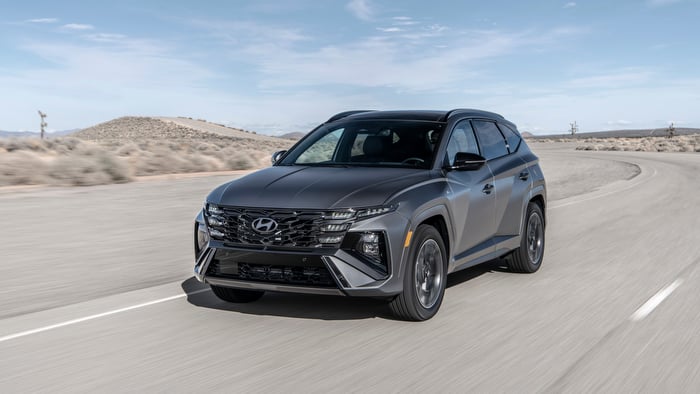
The compact SUV segment continues to evolve, and two models consistently capture attention: the 2026 Hyundai Tucson and the 2026 Toyota RAV4. Both vehicles offer standard all-wheel drive, hybrid powertrains, and advanced technology - but the Tucson takes a different approach that better serves Ontario families and professionals. While the RAV4 maintains its reputation for reliability and broad appeal, the Tucson stands out through powertrain variety, interior refinement, and value-driven features.
For drivers evaluating their next compact SUV, understanding how these two models compare reveals meaningful differences. The 2026 Tucson makes a strong case through three key advantages: powertrain flexibility that accommodates diverse driving patterns, interior space and technology that enhance daily comfort, and standard features that deliver premium experiences without premium pricing. Here's how the Tucson positions itself as the smarter choice for Ontario drivers.
Powertrain Flexibility: Gas, Hybrid, and Plug-In Options
The 2026 Hyundai Tucson offers three distinct powertrain options across its lineup, providing genuine choice based on commuting patterns and fuel priorities. The base Preferred and Preferred with Trend Package trims feature a 2.5L 4-cylinder engine producing 187 hp and 178 lb-ft of torque, paired with an 8-speed automatic transmission. This naturally aspirated engine delivers straightforward performance with a fuel economy rating of 8.8 L/100 km.
For drivers seeking improved efficiency, the N Line and Ultimate trims introduce a 1.6L turbo hybrid system that produces 231 hp with a 6-speed hybrid automatic transmission. This hybrid configuration achieves 6.7 L/100 km across city, highway, and combined driving - a 24% improvement over the gasoline model.
The Ultimate trim takes electrification further by offering an optional 1.6L turbo plug-in hybrid (PHEV) variant that produces 268 hp and provides an all-electric range of 51 kilometres, ideal for daily commutes without gasoline consumption.
The 2026 Toyota RAV4, by contrast, has moved to an exclusively electrified lineup. Every trim features a hybrid system with a 2.5L 4-cylinder engine and fifth-generation hybrid components, producing 236 combined system horsepower. Fuel economy ranges from 5.5 L/100 km (LE) to 6.2 L/100 km (Woodland), with most trims achieving between 5.7 and 5.8 L/100 km combined. The RAV4 also offers plug-in hybrid variants on SE, XSE, and GR SPORT grades, delivering up to 320 hp and an estimated 80-kilometre electric range.
Key Takeaways: Powertrain Comparison
| Feature | 2026 Hyundai Tucson | 2026 Toyota RAV4 |
| Base Engine | 2.5L Gas (187 hp) | 2.5L Hybrid (236 hp) |
| Hybrid Option | 1.6L Turbo Hybrid (231 hp) | Standard on all trims |
| PHEV Option | 1.6L Turbo PHEV (268 hp, 51 km range) | Available on SE/XSE/GR SPORT (320 hp, 80 km range) |
| Fuel Economy (Gas) | 8.8 L/100 km combined | Not available |
| Fuel Economy (Hybrid) | 6.7 L/100 km combined | 5.5 - 6.2 L/100 km combined |
The Tucson's advantage lies in its entry-level gasoline option, which eliminates the hybrid premium for drivers who prioritize lower upfront costs over maximum fuel efficiency. Families with predictable driving patterns or those who prefer mechanical simplicity benefit from this choice, while hybrid and PHEV options remain available for drivers seeking electrification. The RAV4's mandatory hybrid system delivers superior fuel economy across the board but removes the flexibility of a traditional gasoline powertrain - a trade-off that may not suit every budget.
Interior Space and Technology: Comfort and Connectivity
Interior dimensions and technology integration define the daily ownership experience, and the 2026 Tucson emphasizes both areas. The Tucson offers 1,052 mm of front legroom and 1,050 mm of rear legroom across most trims, with headroom ranging from 968 to 1,019 mm depending on whether a panoramic sunroof is equipped. Shoulder room measures 1,464 mm in the first row and 1,422 mm in the second row, providing comfortable space for five passengers. The Tucson's 2,755 mm wheelbase contributes to this spacious interior.
Technology features begin with a 12.3-inch touchscreen infotainment system on the Preferred trim, paired with wireless Apple CarPlay and Android Auto. The Preferred with Trend Package upgrades to a 12.3-inch digital gauge cluster, wireless charging pad, and Digital Key 2 functionality. N Line and Ultimate trims add Bose premium audio with eight speakers, ambient lighting with 64-colour customization, and heated rear seats. The Ultimate trim includes navigation, a head-up display, and ventilated front seats with memory settings.
The 2026 Toyota RAV4 provides a 2,690 mm wheelbase and emphasizes cargo capacity and versatility through 60/40 split fold-flat rear seats. The LE grade features a 10.5-inch touchscreen with Toyota Multimedia, while XLE and higher trims upgrade to a 12.9-inch display. All models include a 12.3-inch digital gauge cluster, wireless smartphone connectivity, and a six-speaker audio system. Limited and XSE Technology Package grades add a nine-speaker JBL audio system, head-up display, and ventilated front seats.
Interior & Technology Highlights
Tucson Preferred:
- 3" touchscreen, wireless Apple CarPlay/Android Auto
- Heated front seats, dual-zone climate control
- 2" gauge cluster
Tucson Ultimate:
- 3" touchscreen with navigation, 12.3" digital cluster
- Head-up display, Bose 8-speaker audio
- Ambient lighting, ventilated/heated seats, wireless charging
RAV4 LE:
- 5" touchscreen, 12.3" digital cluster
- Wireless connectivity, heated front seats
- Automatic climate control
RAV4 Limited:
- 9" touchscreen with navigation, head-up display
- JBL 9-speaker audio, dual wireless charging
- Ventilated/heated seats, panoramic moonroof
The Tucson delivers a 12.3-inch touchscreen as standard equipment even on its entry-level Preferred trim, while the RAV4 reserves its largest 12.9-inch display for higher grades. The Tucson's Digital Key 2 functionality, available from the Preferred with Trend Package onward, allows drivers to unlock and start the vehicle using their smartphone - a convenience feature that enhances everyday usability. The RAV4's 12.3-inch digital gauge cluster comes standard across all trims, a feature the Tucson reserves for Preferred with Trend Package and higher. Both vehicles offer comparable connectivity and audio quality at their respective premium trims.
Standard Features and Value: Premium Equipment Without Premium Pricing
Feature availability across trim levels reveals how each manufacturer approaches value. The 2026 Tucson equips its Preferred trim with LED headlights, heated front seats, an 8-way power-adjustable driver's seat with lumbar support, and a heated leather-wrapped steering wheel. The Preferred with Trend Package adds a panoramic sunroof, 18-inch alloy wheels, leatherette seating, rain-sensing wipers, and a smart hands-free power trunk. The Ultimate trim includes LED projection headlamps, Bose audio, heated rear seats, and advanced driver assistance features such as Highway Driving Assist and Remote Smart Parking Assist.
The 2026 Toyota RAV4 LE includes LED headlights, heated front seats, two-zone automatic climate control, and 17-inch alloy wheels. The XLE grade adds a power-adjustable driver's seat, heated leather-wrapped steering wheel, power back door, and rain-sensing wipers. Limited and XSE Technology Package trims introduce ventilated front seats, panoramic moonroof, JBL audio, and Advanced Park functionality. The Woodland grade emphasizes outdoor capability with all-terrain tires, Rigid Industries LED fog lamps, and unique bumpers and grille.
Standard Feature Comparison
| Feature | Tucson Preferred | RAV4 LE | Tucson Ultimate | RAV4 Limited |
| Infotainment Screen | 12.3" | 10.5" | 12.3" w/ Nav | 12.9" w/ Nav |
| Digital Cluster | 4.2" | 12.3" | 12.3" | 12.3" |
| Heated Seats | Front | Front | Front + Rear | Front + Rear |
| Ventilated Seats | Not Available | Not Available | Front | Front |
| Panoramic Sunroof | Not Available | Not Available | Standard | Standard |
| Premium Audio | 6-Speaker | 6-Speaker | Bose 8-Speaker | JBL 9-Speaker |
| Head-Up Display | Not Available | Not Available | Standard | Standard |
The Tucson's Preferred trim provides a larger infotainment screen than the RAV4 LE, though the RAV4 includes a 12.3-inch digital gauge cluster as standard across all trims - a feature the Tucson reserves for Preferred with Trend Package and higher. At the premium end, both vehicles offer comparable technology and comfort features, with the Tucson emphasizing ambient lighting and smartphone-based vehicle access, while the RAV4 focuses on dual wireless charging docks and panoramic moonroof availability.
Which Compact SUV Fits Your Needs?
The 2026 Hyundai Tucson and 2026 Toyota RAV4 represent two philosophies within the compact SUV segment. The RAV4 commits fully to hybrid and plug-in hybrid powertrains, delivering excellent fuel economy and strong resale value backed by Toyota's reputation for reliability. The Tucson offers powertrain choice, allowing drivers to select a traditional gasoline engine for lower upfront costs or opt for hybrid and plug-in hybrid variants that rival the RAV4's efficiency.
For drivers prioritizing fuel economy above all else, the RAV4's standard hybrid system provides immediate savings at the pump. However, for those seeking flexibility, technology features at accessible price points, and a broader range of powertrain options, the Tucson presents a stronger case. Both vehicles deliver standard all-wheel drive, comprehensive safety suites, and spacious interiors. The Tucson's powertrain variety and competitive pricing make it the natural choice for drivers who value options. Visit 401 Dixie Hyundai to explore the full Tucson lineup and find the trim and powertrain configuration that best fits your lifestyle.