

2026 Hyundai Tucson vs 2026 Toyota RAV4: Compact SUV Comparison for Ontario Shoppers
2026 Hyundai Tucson vs 2026 Toyota RAV4: Compact SUV Comparison for Ontario Shoppers
Posted on June 30, 2026
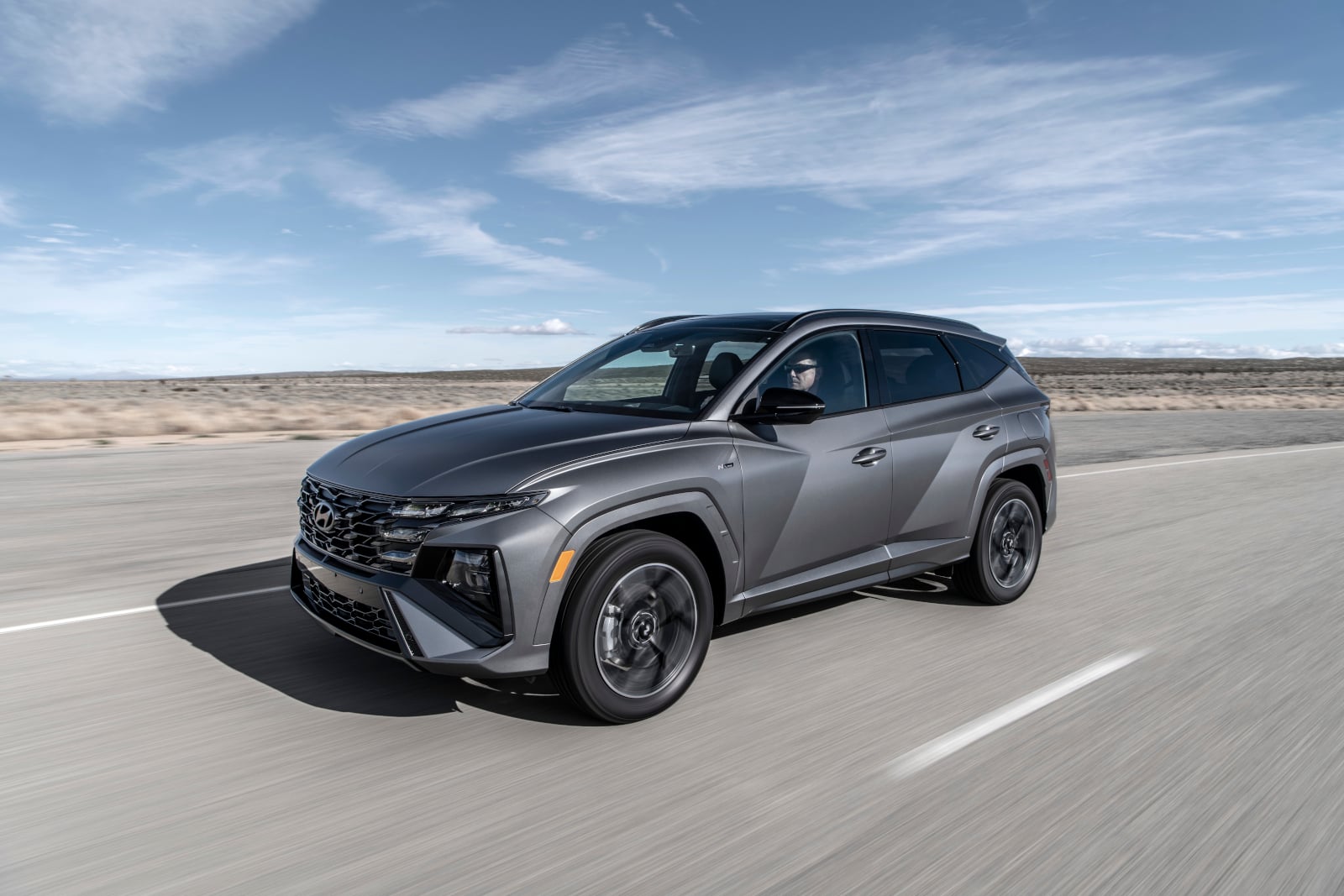
The 2026 compact SUV segment in Ontario is splitting into two camps. One approach locks you into an electrified powertrain. The other leaves the choice to you. The 2026 Toyota RAV4 has moved to an all-HEV and PHEV lineup, dropping its conventional gas option entirely. The 2026 Hyundai Tucson still offers three powertrain paths: a 2.5L gas engine, a 1.6L turbo hybrid, and a plug-in hybrid, all with HTRAC AWD standard across every trim.
For most Ontario drivers, that flexibility is the story. Here is where the two vehicles differ on the specs that actually drive the decision.
2026 Tucson vs. 2026 RAV4: Side-by-Side
| Category | 2026 Tucson | 2026 RAV4 |
| Powertrain choice | Gas, HEV, PHEV | HEV or PHEV only |
| AWD | Standard, all trims | Standard, all trims |
| Cargo behind rear seats (gas/HEV) | 1,095–1,097 L | 1,070 L (HEV trims) |
| Cargo behind rear seats (PHEV) | 902 L | 951 L |
| Ground clearance | 210 mm | 206 mm (most trims) |
| HEV combined horsepower | 231 hp | 236 hp |
| HEV combined fuel economy | 6.7 L/100km | 5.5 L/100km (LE trim) |
| PHEV electric range | 51 km | 80 km |
Powertrain and Performance
The most consequential difference between these two SUVs is the powertrain menu. The RAV4 has eliminated its gas-only entry point for 2026; every RAV4 is now a hybrid or plug-in hybrid. The Tucson keeps all three options available.
That entry-level access matters. The Tucson Preferred runs a 2.5L four-cylinder engine producing 187 hp and 178 lb-ft of torque, paired with an 8-speed automatic. If you want a capable gas SUV without the premium a hybrid system adds, the Tucson is the only one of these two that delivers it.
Step up to the 1.6L turbo hybrid and the Tucson’s combined output rises to 231 hp and 271 lb-ft of torque via a 6-speed hybrid automatic. The RAV4 HEV produces 236 hp from its 2.5L four-cylinder and eCVT, a 5 hp edge that is marginal in real driving. The RAV4 HEV does pull ahead on fuel economy: the LE trim achieves 5.5 L/100km combined, compared to the Tucson HEV’s 6.7 L/100km. If squeezing every litre counts above all else, the RAV4 HEV is the more frugal choice.
For plug-in hybrid buyers, the RAV4 PHEV offers a manufacturer-estimated 80 km of all-electric range. The Tucson PHEV delivers 51 km of electric driving with 268 hp combined, charged through a 7.2 kW onboard charger at 240V. The RAV4’s electric range advantage is real. What the Tucson counters with is structural: you can enter the lineup at the gas level today and move to hybrid as your needs change. The RAV4 forces an electrified starting point at every trim.
Towing capacity follows powertrain. Gas-powered Tucson trims (Preferred, Preferred with Trend, XRT) are rated at 3,500 lbs (1,588 kg) with trailer brakes. The Tucson HEV and PHEV trims are rated at 2,000 lbs (907 kg) with trailer brakes. The RAV4 HEV (XLE and above) and the PHEV SE and XSE grades are also rated at 3,500 lbs (1,588 kg).
Interior, Tech, and Safety
The Tucson’s infotainment screen is 12.3 inches starting at the Preferred trim, with wireless Apple CarPlay and Android Auto standard. The RAV4 LE opens with a 10.5-inch touchscreen, stepping up to 12.9 inches on XSE and higher grades. From the Preferred with Trend Package onward, the Tucson adds a 12.3-inch digital instrument cluster, a wireless charging pad, Digital Key 2, and a panoramic sunroof.
The N Line and Ultimate gain a Bose 8-speaker audio system. The Ultimate exclusively adds a head-up display, Surround View Monitor, Blind View Monitor, and Highway Driving Assist 1.
Both vehicles carry comprehensive active safety as standard. The Tucson includes Forward Collision-Avoidance Assist with pedestrian, cyclist, and junction-turning detection, Lane Keeping Assist, Lane Following Assist, Blind-Spot Collision Warning, Rear Cross-Traffic Collision-Avoidance Assist, and Adaptive Cruise Control with stop-and-go across every trim. The RAV4 matches this with Toyota Safety Sense 4.0, including Pre-Collision System, Lane Tracing Assist, Dynamic Radar Cruise Control, and Blind Spot Monitoring with Rear Cross Traffic Alert as standard on all grades.
The Tucson backs its equipment with a 5-year/100,000 km powertrain warranty and 5-year/100,000 km roadside assistance, applicable to the gas, hybrid, and plug-in hybrid variants.
Cargo and Practicality
The Tucson’s cargo advantage over the RAV4 is clear in the gas and hybrid configurations. The 1.6T HEV Tucson offers 1,097 L behind the rear seats. The RAV4 HEV lineup provides 1,070 L behind the rear seats across its grades. The gas Tucson extends to 2,119 L with the rear seats folded.
The PHEV trims tell a different story. The RAV4 PHEV XSE and GR SPORT provide 951 L behind the rear seats. The Tucson PHEV comes in at 902 L due to its 13.8 kWh battery placement. Buyers choosing either PHEV variant will trade some cargo flexibility versus their gas or HEV counterparts.
Ground clearance is 210 mm across all Tucson powertrains. Most RAV4 HEV grades sit at 206 mm; the GR SPORT PHEV drops to 191 mm. The RAV4 Woodland reaches 216 mm, but that is a purpose-built grade with all-terrain tires and a separate design intent.
Which One Is Right for You?
The RAV4 HEV’s fuel economy and the RAV4 PHEV’s 80 km electric range are both grounded advantages. Drivers who have already committed to a hybrid or plug-in hybrid and prioritize fuel efficiency above all will find real numbers in the RAV4’s favour on those two dimensions.
For Ontario drivers who want the freedom to choose their own powertrain path, more cargo space in gas and hybrid trim, a standard 5-year powertrain warranty, and a starting point that does not require buying into electrification before they are ready, the Tucson covers far more ground. The gas option alone sets it apart from a RAV4 lineup that no longer offers one.
Add the HEV’s 271 lb-ft of combined torque and the PHEV’s 51 km electric range, and the Tucson gives three genuine answers to three different buyer situations, all under the same nameplate, all with AWD already included.
The 2026 Tucson at 401 Dixie Hyundai in Mississauga
The 2026 Tucson brings Ontario compact SUV buyers three powertrain options, standard AWD, a 5-year/100,000 km powertrain warranty, and more cargo space than the RAV4 HEV in the configurations most buyers actually choose.
Visit 401 Dixie Hyundai in Mississauga to explore the Tucson lineup and find the trim and powertrain that fits your daily routine. Book a test drive and see the difference in person.